My first real website started as a project in my web design class with my teacher, Mr. Choate. He gave us a fake business and all the information we needed to put on the page. My job was to turn info into an actual website. At first, it felt like a lot. I was staring at this content about a nail studio and thinking, “How am I supposed to make this look good?” I was and still am new to web design, so it felt (“nerv-racking”)-Deep D.


The fake business I worked on was called Velvet Bloom Nail Studio. I did not come up with the name or the services myself. All of that was gave to me in the assignment. What I did make the CSS which is how everything looked on the screen. That part was up to me. I knew I wanted it to feel calm and professional, not like a random school project thrown together at the last minute. I thought girlish colors and clear sections would fit the nail studio theme, so that is what I tried to do.
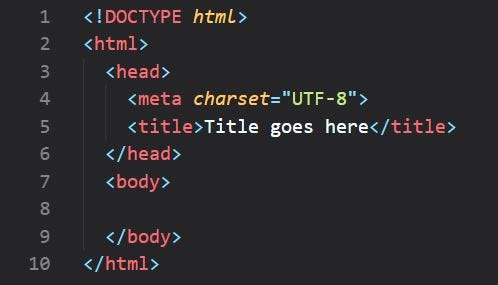
I started by putting the content into basic HTML. I added headings, paragraphs, and a pricing table using the information from the assignment. At that point, it still looked plain and kind of boring, just black text on a white page. But even that felt like a first step. I could see the structure of the site coming together. It was like I had the frame of a house built, but no paint or furniture yet. All the styling was still in front of me.

The real change happened when I started working with CSS. This was where I actually got to be creative. I chose the colors, fonts, and spacing myself. I made a hero section at the top with a large background image and big text so it felt like a real homepage. I played around with padding and margins until the sections did not look crammed together. Every time I refreshed the page and saw a small change, it made me want to keep adjusting things until it felt right.
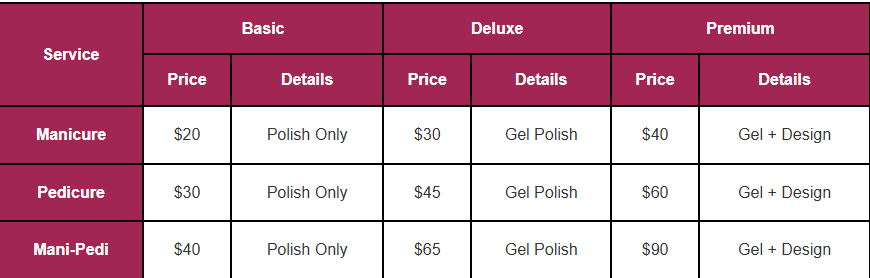
The table was where I learned the most. At first, my table for the manicure, pedicure, and mani-pedi prices looked very basic. It technically worked, but it did not look nice. As we went through class, I learned new ways to style tables in CSS. I figured out how to change the header row color, add borders that actually lined up, and put enough padding in each cell so the text had room to breathe. I experimented with different border styles and background colors until the table finally looked clean and easy to read.
I made plenty of mistakes along the way. Sometimes one missing bracket would break my whole layout. Other times I would style something and it would affect another part of the page that I did not expect. I had to go back into my code and slowly figure out what I did wrong. It was frustrating at times, but those mistakes helped me remember what each part of the CSS was doing. I started to understand how small changes in one place could move or break something somewhere else.
What I liked most was seeing how the site slowly started to feel like a real business page, even though the content was from my teacher. The personality of the site came from the design choices I made. The colors, the spacing, the hero image, the way the table looked, and how the sections were laid out all came from me. That made it feel personal, even if the words themselves were not mine.
This project taught me that web design is not just about having content. It is about how you present that content so people actually want to read it. I learned that styling matters just as much as the words on the page. Even though this was my first website and it is not perfect, I am proud of how far it came from that plain starting point. It was the first time I saw how my own design choices could turn a boring block of text into a real website.
Works Cited
Desklib. “Reflection Paper: Web Design Skills, Personal Branding, and Strategy.” Desklib, 13 Mar. 2023, desklib.com/study-documents/reflection-web-design-skills/
Pujan “His brain” 17 Mar. 2026 acharya.mydcts.org